
CNC Precision Milling Cost in 2026: A Buyer's Cost Model Where Finish Meets Tolerance
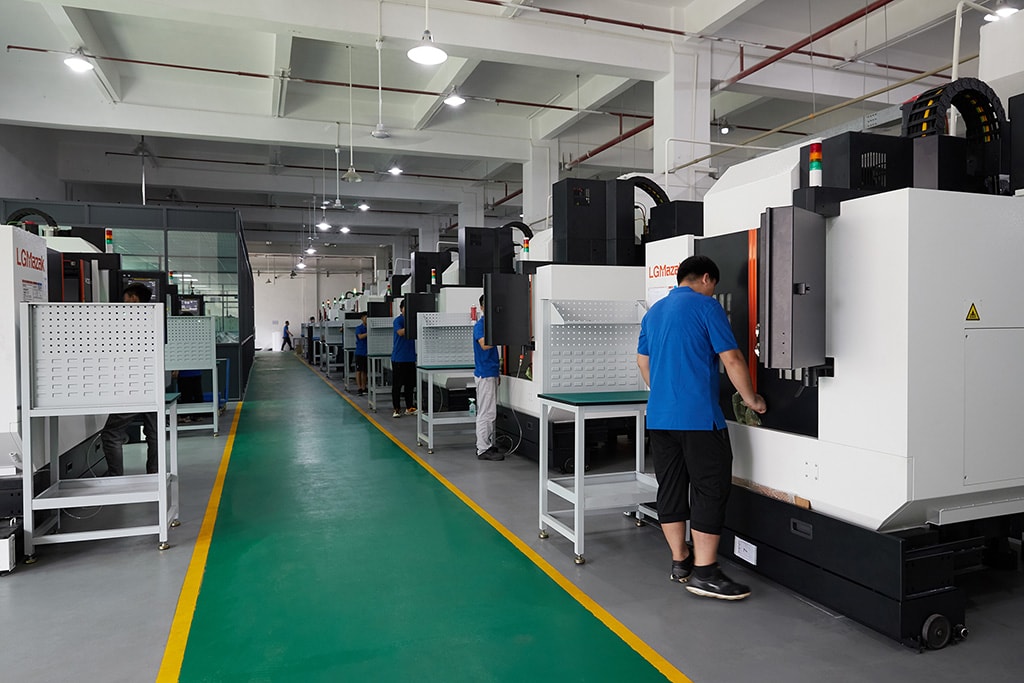
Precision milling is priced where two callouts meet: the tolerance that says where the surface must be, and the finish that says how it must feel. On a precision-milled part the two are the same cost problem, because a fine finish and a tight tolerance are usually demanded on the same feature, and both are delivered by the same machine, the same rigid workholding, and the same controlled finishing pass. This guide is the buyer's cost model for CNC precision milling in 2026: what a precision-milling quote really pays for, why surface finish decides whether a milled part works — and therefore what it costs — how material, geometry, and quantity move each line, and how to build a budget for parts that hold their finish and their tolerance together.
What does a CNC precision milling quote actually pay for?
Strip any serious precision-milling quote back to its bones and the same lines appear underneath the formatting, with the finish-and-rigidity story running through each one.
| Line item | What it pays for | What moves it |
|---|---|---|
| Material | The stock at the grade and condition on the drawing | Grade, form, and whether the lot is verified against a mill certificate |
| Rigid workholding and setup | The fixture that stops the part from deflecting under the cutter | The difference between a machine brand and a held tolerance |
| Machining time | Roughing, semifinishing, and finishing passes on the features | A finishing pass is a separate, slower line from a roughing pass |
| Axis count | The setups a 3-, 4-, or 5-axis machine can collapse | Each setup removed saves a fixture and a chance for drift |
| Grinding | The bands and finishes a mill cannot hold | A separate process family for the tightest tolerance and finish |
| Inspection and documentation | CMM time, surface measurement, SPC records, reports | Finish and dimension are both measured, and both are lines |
There is no honest single number for precision milling, because the drawing, the material, the finish, and the quantity decide it together. What stays consistent is the structure, and the structure is what makes the price readable and the finish auditable.
Why does surface finish decide whether a milled part works, and what it costs?
The hub of this site makes the argument that anchors the whole cost model: on a precision-milled part, surface finish decides whether the part works. A sealing face that leaks, a bearing surface that wears, a mating face that frets — each is a part that measured right on dimensions and failed on finish. That is why the finish callout is not a cosmetic afterthought; it is a functional requirement with a machining cost attached.
The cost logic runs through the finish. A roughing pass leaves a surface far from the drawing; a controlled finishing pass with the right cutting parameters brings it to the Ra the function needs; and a surface that demands better than the mill can hold moves to grinding. Each step down the finish ladder is a step up the cost ladder, and the quote should show which one your drawing demands. The site's question — what do Ra and Rz actually measure, and which number does each surface need — is a buying question as much as an engineering one: specify the right parameter on the right surface, and you stop paying for measurement and machining the surface does not need.
Why does workholding rigidity matter more than the machine brand?
Precision milling fails in deflection before it fails in capability. A part that flexes under the cutter cannot hold its tolerance, no matter how accurate the machine is, which is why the site's question cuts to the real issue: why does workholding rigidity matter more than the machine brand? The fixture decides whether the part stays still while the cutter removes material, and a rigid setup is what lets a finishing pass hold a micron-level band instead of chasing chatter.
The cost consequence is direct. Rigid workholding costs money to design and build — it is a fixture line on the quote — but it is cheaper than the alternative, which is a part that drifts, chatters, or needs rework. Vibration and chatter are the enemy of both finish and tolerance: chatter marks a surface and widens a dimension at the same time, and the fix is a slower pass, a stiffer fixture, or both. Read the quote for the fixture strategy on the features that matter, because the shop that invests in workholding is the shop whose finish-and-tolerance pair actually holds.
How do finishing passes and axis count move the price?
Machining time on a precision part splits into roughing, semifinishing, and finishing, and the finishing pass is the line where precision milling earns its price. A roughing pass removes material fast and leaves a rough surface; a finishing pass runs slower, takes a lighter cut, and leaves the surface the drawing demands. The services page of this site shows how cutting parameters decide the surface finish — feed, speed, and depth of cut are the variables that turn a pass into a finish — and each controlled pass is a line on the quote.
Axis count is the other structural cost. A part that needs features on several faces can run across multiple three-axis setups, each with its own fixture and its own chance for error, or it can run on a four- or five-axis machine in fewer setups. Five-axis reduces setups for complex geometry, which is why it pays for itself on the parts that need it, and why a simple face-milled plate does not belong on a five-axis hour. Ask the quote which axis count the part assumes, and why: the answer tells you whether you are paying for the geometry or for the shop's habit.
Which material should a precision-milling budget assume?
Material moves a precision quote twice: once as stock, and again as the behavior that makes finish and tolerance hard to hold together. Aluminum 6061 machines cleanly and holds a good finish; the stainless grades work-harden at the cutting edge and make a fine finish harder to produce; titanium and the hardened steels deflect and wear tools, pushing both the cycle and the risk up. The index of this site names the materials and parts that justify precision milling, and the rule for the budget is the same as everywhere in precision work: name the grade and the condition, because a substituted alloy passes every dimension and fails in the finish or in service.
Two rules keep the material line honest. First, verify the shop checks incoming stock against its mill certificate — every lot on this floor is XRF-verified before machining. Second, read the material as part of the finish problem: a grade that is difficult to machine makes every fine-finish feature more expensive to produce, not just the ones that look demanding.
How much do tolerance and finish stack onto the price?
Tolerance is the steepest part of the machining cost curve, and in precision milling it stacks with finish on the same features. The index of this site asks which tolerance level each feature actually needs, and which tolerances precision milling can hold, and how they are proven. On this floor, milling holds ±0.003 mm on critical features, and precision grinding reaches ±0.002 mm, verified on Hexagon CMMs with process capability at Ppk ≥ 1.67 at the initial study on key characteristics and Cpk ≥ 1.33 on general characteristics. Capability is reported per characteristic: every report names the feature, its tolerance band, the sample size, the sigma method, and the study window. And a demonstrated Cpk of 1.851 on a representative length characteristic.
Read the tolerance band before you read the index. Cpk is a ratio of the tolerance band to the process spread, not an absolute measure of accuracy. The figure above was recorded on a length characteristic with a 0.4 mm band (76.1–76.5 mm) — wide by design. Hold the same process spread against a ±0.005 mm feature and it fails outright. Ask for the band, the subgroup count and the sampling window on every capability number a supplier quotes.
The precision twist is that finish and tolerance are verified together. A sealing surface is measured for its dimension on the CMM and for its roughness on a profilometer, and both numbers travel in the report. When you review a drawing, group the tolerance and the Ra on each functional face and ask what process that pair demands — a face that pairs ±0.003 mm with a fine finish stays on the mill with a controlled finishing pass, while a face that demands ±0.002 mm and a ground finish moves to grinding. Specify the tolerance and the finish the function needs, and the budget will price the process that actually holds both.
How does quantity bend the unit price on precision milling?
The setup on a precision job carries real weight, because the first-piece prove-out has to demonstrate the finish and the tolerance together: the fixture is proven, the finishing parameters are set, and the surface is measured before the run begins. That fixed cost lands entirely on the first part, which is why a precision-milled prototype looks expensive. As quantity rises, the setup and the finishing-program work spread across the run and the unit price falls toward the sum of the material and the machining time.
Two rules keep the quantity curve honest. First, use the MOQ of 1 piece to validate the finish-and-tolerance pair before you commit volume — the cost of measuring one surface is trivial next to the cost of a lot that fails on finish. Second, budget the reorder at the proven rate: once the fixture, the finishing parameters, and the inspection routine are documented, the same part ships faster and cheaper, because the setup is no longer a gamble and the finish is no longer a surprise.
What hidden costs sit inside a precision-milling quote?
The visible lines are half the price; the other half hides in what the quote does not say. A quote that prices dimensions but not finishes has hidden the finishing passes and the surface measurement the drawing demands. A quote that treats workholding as incidental has hidden the rigidity that holds the tolerance. A quote that prices a finish without naming the process that produces it has hidden the grinding step from the total. A quote that absorbs inspection into the margin has hidden the surface report you will recreate at incoming. And a quote from a shop that cannot show its machine list, its metrology, or its certificate numbers has hidden the verification that makes a finish claim real.
The supplier itself is the largest hidden cost of all. A trading desk adds a margin and removes accountability, and on finish-critical work the accountability is the measurement. The brand behind this site is Dongguan Zhuohang Ltd, founded in 2005, registration number 91441900MA4UWT6X39, operating a 6,800 m² facility in Hengli Town, Dongguan, with 100+ people, 100+ machines from named brands such as Mazak and Brother, and an inspection lab that measures finish and dimension together. Its certificates carry numbers a buyer can verify: ISO 9001:2015 (116024/A/0001/UK/En), IATF 16949:2016 (product design excluded) (131941/A/0001/SM/En), and ISO 14001:2015 (116024/B/0001/UK/En). When the entity, the floor, and the metrology are checkable in writing, the margin stays in the quote where you can read it.
How do you compare two precision-milling quotes on the same basis?
A quote you can compare states its assumptions, and on precision milling the assumptions are finish and rigidity. Make sure every shop shows the finish it will actually deliver per surface and the instrument that will measure it, the tolerance with the capability evidence behind it, the fixture strategy for the critical features, the axis count and number of setups, the material grade and how the lot is verified, and the quantity tier with prototype and production separated.
Compare the itemized routes at the quantity you actually plan to order, because the same drawing at fifty pieces and at five thousand is two different cost problems — the setup is the same, but its weight per piece is not. And weigh the price against the finish-and-tolerance evidence in the same breath. The lowest quote on precision milling is rarely the lowest total cost: the part that arrives without its surface report or its CMM data is the part you will pay to measure, sort, or replace. The evidence is part of the product.
How do you build a 2026 precision-milling budget that holds?
Build the budget the way this site reads a drawing — finish first, tolerance second, quantity third.
- Put the finish and the tolerance on the features that earn them. Group the Ra and the band on each functional face, use the parameter (Ra or Rz) that matches the surface, and leave the rest on the general block. A drawing that specifies its finish-and-tolerance pairs correctly is a drawing the shop can quote for the part you actually need.
- Get the DFM review on the features that quietly cost. Send the drawing and ask which finishes are finer than the function needs, which features could move to a looser band, and which faces are pulling the part toward grinding. Fix the drawing first; then budget the fixed part with its real route.
- Quote the prototype and the production tier on the same page. The prototype at MOQ 1 proves the finish-and-tolerance pair at full setup weight; the production tier shows where the fixed lines amortize. Budget both at your real quantity, and the 2026 number will survive the first surface report.
Keep the closing rule in front of you: read the quote as a finish-and-tolerance pair held on a rigid fixture, not a total, and the precision-milling budget you build will hold across the drawing changes, quantity shifts, and reorders that real sourcing always brings.
Frequently Asked Questions
How much does CNC precision milling cost in 2026?
No honest shop quotes precision-milled parts without a drawing, because the price is set by the finish-and-tolerance pairs on the functional faces, the material grade, the axis count and setups, and the quantity. A simple part on general tolerances at production quantity sits low; a part with fine finishes, tight bands, and multi-face geometry at prototype quantity sits far higher. Budget the finish-and-tolerance pairs the drawing actually carries.
Why does surface finish cost so much on a milled part?
Because a fine finish is produced by a controlled finishing pass, and a finish the mill cannot hold moves to grinding. Every step down the finish ladder adds a slower pass, a tighter process, or a new process family, and the finish is measured and reported, which is a line of its own.
What tolerances and finishes can precision milling hold?
Milling holds ±0.003 mm on critical features, and precision grinding reaches ±0.002 mm, verified on Hexagon CMMs with process capability at Ppk ≥ 1.67 at the initial study on key characteristics and Cpk ≥ 1.33 on general characteristics. Capability is reported per characteristic: every report names the feature, its tolerance band, the sample size, the sigma method, and the study window. Surface finish is measured in the inspection lab with the instruments that back the Ra or Rz callout.
How do I know a finish claim in a quote is real?
Ask which instrument measures the finish, what the report will contain, and whether the finish was produced by the process the quote names. A shop that measures finish in its own lab and ships the surface report with the parts is a shop whose finish claim you can audit.
What is the minimum order, and do reorders cost less?
The MOQ is 1 piece, so a single prototype can validate the finish-and-tolerance pair before volume is committed. Once the fixture, the finishing parameters, and the inspection routine are documented, reorders ship faster at a lower per-piece rate.
Which company and certificates back the quote?
The brand behind this site is Dongguan Zhuohang Ltd (registration 91441900MA4UWT6X39), founded in 2005, at a 6,800 m² facility with 100+ people and 100+ machines, certified to ISO 9001:2015, IATF 16949:2016 (product design excluded), and ISO 14001:2015 with verifiable certificate numbers.
Want a precision-milling quote priced on the finish-and-tolerance pair?
Email the STEP or IGES model, the material grade, and the toleranced 2D drawing to [email protected] or call +86 13126536955. You will get a design-for-manufacturing review, the fixture and finishing plan, and an itemized quote with the prototype and production tiers on the same page.